on Posted on Reading Time: 4 minutes
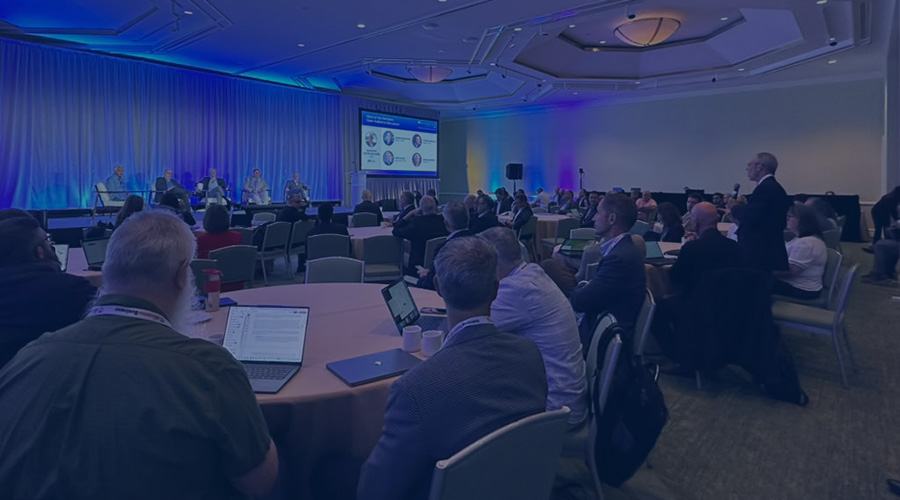
Four days of Mplify Member Workdays and Summit discussions in Boston reinforced a clear shift: NaaS is moving beyond connectivity on demand and isolated implementations toward broader multi-provider solutions across an automated networking ecosystem.
AI is accelerating that shift. AI is redefining network infrastructure requirements, while NaaS is becoming the automated network service supply chain for AI. That calls for deeper lifecycle automation, greater interoperability, trusted coordination, and more intelligent interaction between networks, platforms, and partners.
In Mplify’s November 2025 Market Brief, NaaS: The Automated Network Supply Chain for Agentic AI, I first introduced this framing. What we saw in Boston, combined with this year’s Mplify NaaS Excellence Award submissions, provides growing evidence of that model taking shape, while also highlighting the work required to scale it..
Key Takeaways from Boston:
AI for NaaS and NaaS for AI are beginning to converge.
AI is being applied to business-process automation, network operations, security, and orchestration, increasingly alongside standardized LSO capabilities. At the same time, networks must evolve to support the dynamic connectivity, performance, security, and automation needs of AI workloads.
AI workloads are creating distinct network requirements.
AI training, inference, fine-tuning, data movement, and distributed enterprise AI create different combinations of bandwidth, latency, determinism, locality, scalability, resilience, and security needs. Network design and services need to reflect the workload.
AI-ready networking is becoming the next competitive battleground.
As AI infrastructure becomes more distributed and dynamic, differentiation will depend on delivering the right performance, reach, security, flexibility, and service experience for different workloads. As GPU and other AI infrastructure resources become easier to consume and scale on demand, network services will face growing pressure to match that flexibility in discovery, provisioning, scaling, modification, and assurance.
NaaS for AI extends beyond connectivity.
AI infrastructure spans compute, data, networking, interconnection, cloud, security, and physical infrastructure. The opportunity for NaaS is to help connect and coordinate these distributed resources, potentially including network-aware AI gateways that can steer traffic or requests to the appropriate AI service or LLM based on performance, security, policy, location, or cost.
AI-enabled LSO is being demonstrated in more practical ways.
Agentic LSO work now includes demonstrations using MCP servers, reusable agent capabilities, Agent-to-Agent communications, and standardized LSO interfaces. These efforts show how AI agents can interact with network capabilities and manage workflows across organizational boundaries.
Trust, security, governance, and human control become more important as autonomy grows.
Agent identity, delegated authority, authorization, auditability, Zero Trust, quantum-safe connectivity, and secure inter-agent communications are becoming core design considerations. Greater autonomy makes it more important to define where agents can act independently and where human judgment remains necessary.
NaaS is moving beyond islands of excellence, but scaling remains difficult.
Leading companies have demonstrated significant automation within their own environments and with selected partners. The next challenge is extending that success across a broader ecosystem of buyers and sellers with different priorities, capabilities, systems, and levels of implementation maturity.
LSO-enabled automation continues to broaden worldwide.
More than 100 service providers are committed to or in production with standardized Mplify LSO APIs, with more than 60 involved in direct LSO-to-LSO implementations. Activity continues to expand, including greater sell-side implementation and buyer-seller coordination in the U.S. market. Direct APIs remain important, while portals, marketplaces, adapters, and other digital interaction models will coexist.
Lifecycle automation remains uneven.
Inter-provider automation of commercial transactions such as address validation, product offering qualification, quote, and order is considerably further along than operational functions. Product inventory and trouble ticketing are appearing in some implementations, while performance monitoring and fault management remain at an earlier stage.
Cross-company alignment remains a core scaling obstacle.
Buyers and sellers have to align on more than APIs. Product models, business processes, implementation priorities, supported functions, and levels of maturity all need to work across organizational boundaries.
Partner discovery is receiving greater industry attention.
Identifying buy-side and sell-side partners that are both commercially relevant and ready to automate via LSO has been a persistent obstacle for several years. It is encouraging to see greater focus on partner discovery, capability visibility, and mechanisms that can help companies identify and engage the right automation partners.
Federation is becoming more relevant as NaaS expands across organizations.
Trusted identity, partner and capability discovery, interoperability, governance, and multi-party coordination become more important as services span additional networks and platforms. Mplify’s emerging NaaS Federation work is designed to help address some of these barriers while preserving commercial and operational autonomy.
These themes will directly inform two upcoming Mplify research reports.
Scaling NaaS Automated Network Service Supply Chains, targeted for launch on 18 November, will examine progress in moving beyond isolated automation successes toward scalable multi-provider coordination. The research will focus on partner reach, transaction models, lifecycle depth, interoperability, buyer-seller alignment, and readiness for more intelligent workflows. The findings should also help clarify where initiatives such as NaaS Federation can address gaps in partner discovery, trust, interoperability, and coordination.
Our NaaS for AI research, coming in January 2027, will examine how AI is redefining network infrastructure requirements, why AI-ready networking is becoming a new competitive battleground, and how NaaS needs to evolve to support distributed, dynamic, and automated AI infrastructure.
Learn More
- Listen to Mplify CTO Pascal Menezes’ strategic vision for the AI era.
- Hear Stan Hubbard and leading analysts discuss NaaS State of the Industry
- View all presentations and recordings from the Mplify Member Summit – Americas.
- Download the Mplify Market Brief: NaaS: The Automated Network Supply Chain for Agentic AI.
- Read the Mplify NaaS Industry Blueprint.